MSP David Green secures meeting in bid for £1m for Highland Hospice programme and cross-party support
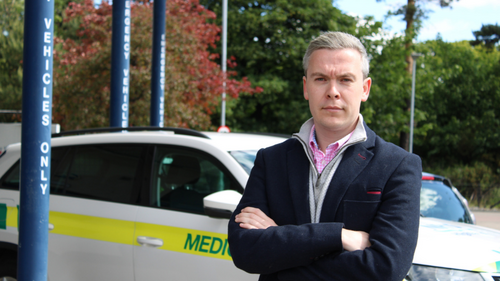
Far north MSP David Green has secured cross-party support and a key meeting to try and hammer out a solution to fund a game-changing Highland Hospice programme.
Mr Green was advocating for the End of Life Care Together that can keep people out of hospital while giving them the option to spend their last days at home.
The programme and partnership are led by Highland Hospice and NHS Highland but the health board did not move to full commissioning at the end of the pilot.
To expand it across the Highlands the Hospice needs £1 million a year which it estimates can save the public purse around £6 million a year.
The pre-budget debate saw speakers from all the main parties voice their support, including significant support from the two largest groups SNP and Labour.
In his speech Mr Green highlighted the case of Kathleen who admitted to hospital with sepsis but was determined to spend her last days at home.
Through the Hospice programme she was able to die two months later at home with her husband George rather than in Raigmore Hospital.
As George put it: “Surely a patient in their own home, where they want to be, and with carers is more cost effective than a bed in Raigmore?”
Mr Green said: “With the Scottish Government’s budget on the horizon, I hope this debate will focus minds across Government.
“Our ask is simple: an investment of £1 million a year to expand the provision of the End of Life Care Together partnership.
“That, I believe, is the compassionate choice. It would enable people across the Highlands to spend their final days where they wish to be: at home, surrounded by the people they love.”
He concluded: “Every family in the Highlands deserves the same, whether they live in Inverness or Wick - or indeed anywhere in Scotland.
“If this is not what public service reform looks like, then what is? If this is not what compassionate healthcare looks like, then what is?
“And if this is not why we are in this Parliament - to make a real difference to people’s lives at their moments of greatest need - then what is?”
The arguments put forward by the far north MSP and Highland Hospice won significant backing from MSPs including Labour’s health spokeswoman Jackie Baillie and former SNP health minister Jenni Minto.
Ms Baillie said: “Highland Hospice estimates between 20 and 40 per cent of people admitted to hospital could potentially be supported at home if the right care were available.
“Hospices shouldn’t be expected to deliver essential elements of our health and care system whilst remaining disproportionate dependent on donations and fundraising.”
While Ms Minto said: “Highland Hospice have shown how to shift end of life care from hospital settings to home based care.
“This has resulted in patients and families getting the care they wish to receive but importantly reducing pressure on a seriously over-stretched hospital system.”
SNP Inverness and Nairn MSP Emma Roddick made an emotional speech backing the Hospice scheme, asking: “Who would not back such a critical service? Unfortunately, the answer seems to be the NHS.”
Her party colleagues Bob Doris, and Paul McLennan also spoke in favour as did Reform’s Helen McDade and the Greens Cara McKee.
Alison Thewliss, the Minister for Community Care, said she had asked her officials to arrange a meeting in the new year to potentially unlock ways to fund the scheme.
If that happens then Highland Hospice and NHS Highland alongside Macmillan Cancer Support, Connecting Carers, Marie Curie, Highland Senior Citizens Network, Scottish Care would work together.
It had already delivered impressive results.
Hospice analysis found that the 1,777 people who accessed the Helpline established through the partnership spent a collective 6,433 fewer days in hospital.
And the 250 people who accessed Palliative Care Response Service spent a total of 3,718 fewer days in hospital.
Taken together that is the financial equivalent of £5.6 million annually, based on published NHS Highland bed day rates – but the NHS did move to full commissioning.
David Green, Caithness, Sutherland and Ross MSP said:
“This is an emotive subject, and I was grateful to my colleagues for their sensitive contributions.
“Credit must go to Highland Hospice, its staff and volunteers. Their work speaks for itself, and we saw that reflected in the debate.
“The issue is relatively simple: Highland Hospice and its partners have unlocked an opportunity to support people at the end of their lives, and that would be worthwhile in itself.
“But there are wider benefits to funding this programme. It would help ease delayed discharges and the mounting pressures on social care across the region.
“It would also save public money in the long run.
“Four in ten people in the Highlands who were referred for additional care at home during the last three months of their lives received none before they died. That is not a compassionate approach.
“I welcome Alison Thelewis’s decision to call a meeting in the new year, and the Government’s engagement to date. But be under no illusions: we are looking for results, not meetings.”
Kenny Steele, CEO of Highland Hospice:
"On behalf of all the dedicated staff and volunteers at Highland Hospice I would like to extend my heartfelt thanks to David Green MSP for leading such a powerful debate in the Scottish Parliament on the work of Highland Hospice. It is incredibly motivating to hear cross party support and recognition from across Scotland.
“We are delighted that Alison Thewliss, Minister for Community Care, who leads on palliative care for the Scottish Government has committed to work with NHS Highland to find a way forward to support Highland Hospice to achieve its ambition to deliver care at home for everyone in the Highlands that chooses to die at home."