Newly elected MSP joins growing political support for Coul Links
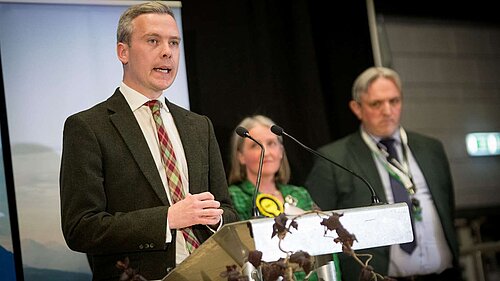
The newly elected MSP for Caithness, Sutherland and Ross David Green is the latest politician to back the proposed Coul Links Golf Course, saying the latest ecological evidence reinforces the need for active management alongside strengthening the economic case.
His support follows the publication of a new ecological survey by Dr Andy McMullen of Botanaeco, which found that the spread of invasive species at Coul Links increased by 44% between 2021 and 2026. The survey also highlighted that interventions under the current management agreement between the landowner and NatureScot had been limited to small areas of gorse and birch, with an average annual budget of only £20,000.
In the report, which has been submitted to Scottish Ministers as part of the ongoing planning process, Dr McMullen concluded: “If the current trajectory of invasive species spread continues unabated, the habitats will ultimately be dominated by a small number of invasive species.” He added: “The rate of spread will increase exponentially.”
The community-led group, Communities for Coul (C4C), says approval of the proposed golf course would unlock £500,000 in each of the first two years - £1 million in total - for habitat restoration and invasive species control across the wider Coul Links site. They say funding would also continue throughout the lifetime of the course, and the restoration programme would be carried out under the oversight of NatureScot.
The Dornoch Firth and Loch Fleet Ramsar site, which includes Coul Links, covers 6,513 hectares. Communities for Coul notes that the proposed golf course would occupy 14.7 hectares - just 0.22% of the Ramsar site. Direct physical changes, such as tees and greens, would affect only 1.5 hectares, or 0.023% of the protected area.
Caithness, Sutherland and Ross MSP David Green said: “The latest ecological evidence shows that maintaining the status quo is simply not enough. Coul Links needs active, long-term management, and this proposal offers a unique opportunity to secure that investment while also delivering benefits for the local community.
“I recognise that this proposal does not have universal support, but it is important to remember that local people voted in favour of it in a community ballot. I have also heard from many residents who have pleaded with me to support the project because they want to see opportunities for young people to stay, work and build their future here. Against the backdrop of depopulation across the Highlands, I recognise those needs all too well.
“I believe this development has the potential to strengthen East Sutherland’s reputation as one of the world’s great golfing destinations, deliver significant investment in habitat restoration and create jobs locally. It is a community-led proposal, and if approved, I will work with developers and residents to ensure the commitments made on community benefit and the environment are delivered as intended.”
He added: “The Scottish Government must also recognise that every planning decision has consequences. If Ministers decide not to approve this project, they need to explain how they intend to replace the jobs, affordable homes, community investment, and long-term habitat management funding that would be lost.”
Mr Green’s backing adds to support from politicians across the political spectrum, including former SNP Deputy First Minister Kate Forbes, former independent MSP Fergus Ewing, former Labour MSP Rhoda Grant, former Conservative MSPs Edward Mountain and Jamie Halcro Johnston, and local Liberal Democrat MP Jamie Stone. They have all argued that the project would deliver significant socio-economic benefits, including job creation and housing.
That economic case has also been detailed in an independent impact assessment by leading economist and Scottish Government adviser Professor David Bell, which forecasts that the estimated £50 million private investment in the Coul Links development would support up to 400 full-time equivalent jobs and generate around £12 million a year for the local economy through increased visitor spending.
ENDS.