Scot Govt must “do better” over Motability changes for disabled Highlanders
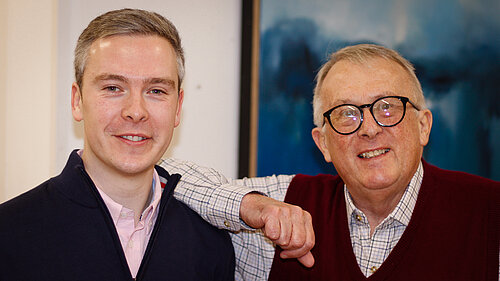
The Scottish Government is being urged to "do better" after agreeing to cuts to the Motability Scheme's standard mileage allowance which Ministers are being warned will hit disabled people in the Highlands hardest.
Far North representatives David Green MSP and Jamie Stone MP are speaking out after being contacted by “a considerable number of disabled constituents” who they say are “deeply concerned” about what these measures will mean.
From 1 September 2026, new Motability leases in Scotland will have their standard mileage allowance reduced from 60,000 miles to 30,000 miles over three years, with excess mileage charges also being introduced.
The Motability Scheme allows disabled people to lease a car, wheelchair-accessible vehicle or scooter using their mobility allowance. In Scotland, the scheme operates under a separate agreement known as the Accessible Vehicles and Equipment Scheme (AVES), meaning changes cannot be introduced without the agreement of Scottish Ministers.
In a letter to the Cabinet Secretary for Social Justice and Housing, the Liberal Democrat politicians have requested that the Scottish Government publish the assessments it made before agreeing to these cuts.
David Green, the MSP for Caithness, Sutherland and Ross, said:
"I share the concerns that constituents have raised with me about what these cuts could mean for their independence.
"Life in the Highlands means people have to travel much further to get to hospital appointments, work or everyday services. Disabled people should not be penalised because they live in a rural area.
“That’s why Jamie and I have written to the Scottish Government. Ministers should not have given the nod to these changes, but there remains a chance for Ministers to think again and do better to protect people who rely on this scheme.”
Caithness, Sutherland and Easter Ross MP Jamie Stone added:
"For many Highlanders, travelling long distances isn't a choice – it's part of everyday life. These changes could leave people facing extra costs simply because they live in a remote area.
“We want the Scottish Government to look again at the impact on rural communities and make sure disabled people can continue to travel without being unfairly disadvantaged.”
ENDS
Notes to editors:
Please see the text of the letter below.
Dear Cabinet Secretary
We are writing following Motability's recent confirmation that changes to the Accessible Vehicles and Equipment Scheme will apply in Scotland from 1 September 2026 for new leases, including a reduction in the standard mileage allowance from 60,000 miles to 30,000 miles over a three-year lease and the introduction of excess mileage charges.
Since these changes were first proposed, we have been contacted by a considerable number of disabled constituents who are deeply concerned about what these measures will mean for them and their families.
As representatives of Highland communities, we know many disabled people must undertake lengthy journeys regularly. Whether travelling to medical appointments at Raigmore Hospital, specialist treatment in Aberdeen or Glasgow, work, college, or just asserting their independence, carrying out day-to-day tasks, the distances in the rural Highlands can be considerable. You will be aware that public transport is very limited or even completely unavailable to many of our constituents.
The concern raised with us is that Highland residents already use the full 60,000 miles available through the scheme. Several constituents have said they regularly exceed the new annual allowance. Even with the additional rural mileage provision of up to 3000 miles per annum, the overall allowance will still be substantially lower than before.
Disabled people in the Highlands cannot simply choose to travel less. The distances they need to travel are the result of geography and the centralisation of services. We are certain that you will agree that people should not be penalised for living in rural or remote communities. Against that background, we would appreciate further information on the work the Scottish Government undertook before agreeing to these arrangements.
In particular, we would like to know whether the Scottish Government has undertaken a full assessment of the likely impact on users of the Accessible Vehicles and Equipment Scheme in Highland communities. Has an analysis been conducted to determine how many current users are likely to exceed the new mileage limits and face excess mileage charges? What assessment has been made of the effect on employment, access to healthcare, and independent living?
We recognise the difficult circumstances which have arisen following the changes announced by the UK Government. Nevertheless, many disabled people across the Highlands will be disappointed that the outcome of discussions has resulted in arrangements that fail to reflect the realities of rural Scotland.
We therefore ask what further consideration can be given to protecting disabled people in remote and rural communities who rely upon the scheme to maintain their independence.
We would be grateful for an answer that we can share with constituents.
Yours sincerely
Jamie Stone MP
Member of Parliament for Caithness, Sutherland and Easter Ross
David Green MSP
Member of the Scottish Parliament for Caithness, Sutherland and Ross